
AI-generated illustration. Choose one outing that fits around the nap routine: a nearby park or an indoor option with confirmed access.
For a Durham toddler outing before nap, choose one nearby park or an indoor option with confirmed access. Then work backward from nap time. Allow for travel, parking, snacks and leaving, not just the activity itself.
This plan compares a park visit with a library visit as a possible rainy-day alternative. No specific Durham venue’s hours, fees or access details have been verified here. Check them before choosing.
Set your exit time before choosing where to go
Start with your family’s numbers:
- Nap time: When you want your toddler ready to sleep.
- Home settling time: Allow for lunch, a diaper change and the nap routine, as needed.
- Return journey: The trip home, allowing for traffic.
- Departure buffer: Time to leave the activity, reach the car and buckle everyone in.
Start heading out of the activity at:
Nap time − home settling time − return journey − departure buffer
Worked example: a noon nap
These are planning assumptions, not verified Durham travel times:
| Planning item | Assumption |
|---|---|
| Nap begins | Noon |
| Settling at home | 30 minutes |
| Return journey | 20 minutes |
| Departure buffer | 10 minutes |
| Required home arrival | 11:30 a.m. |
| Car leaves destination | 11:10 a.m. |
| Start the exit | 11 a.m. |
An 11 a.m. reminder means starting the exit, not driving away or offering one more activity. If lunch and settling need longer than 30 minutes, move the exit earlier.
The schedule protects time for the routine. It cannot guarantee sleep.
Choose a park or an indoor alternative using the same limits
A park and a library can both be candidates, but each needs to pass the same checks.
| Decision | Short park visit | Indoor library alternative |
|---|---|---|
| What to verify | Park access hours, closures, playground suitability and fees | Branch opening time, visitor access, fees and reservation rules |
| Arrival overhead | Parking and the walk to the play area | Parking, entry and finding the intended space |
| Bathroom needs | Restroom availability during your visit | Bathroom and changing arrangements |
| Weather limits | Rain, heat, storms, slippery surfaces or closures | Safe travel, even though the activity is indoors |
| Exit friction | Distance to the car and stopping play | Distance to the exit and any timed activity |
| Reason to reject it | Too little play time after travel and parking | Opens too late, requires an unavailable reservation or conflicts with your exit time |
For local checks, use the official Durham Parks and Recreation information for the exact park and the official Durham County Library location page for the exact branch. Check scheduled activities separately for age guidance, registration and timing. Building hours do not establish event availability.
If a required detail is unclear, confirm it with the venue or choose a simpler option.
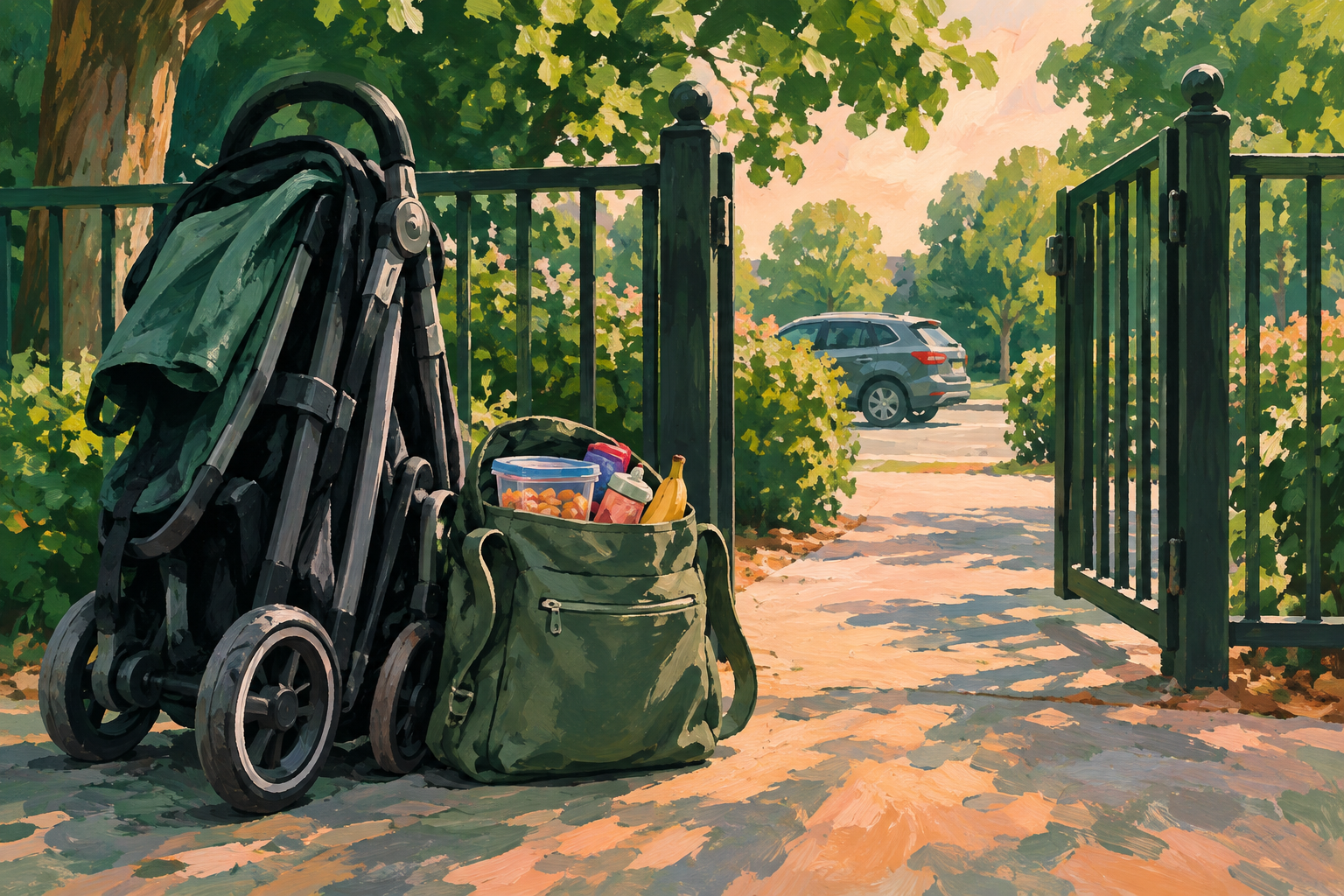
AI-generated illustration. Leaving takes time beyond the activity itself. In the article’s illustrative schedule, starting the exit at 11 a.m. allows ten minutes to reach the car and buckle everyone in before driving home.
A door-to-door morning you can adapt
This example assumes a 20-minute journey each way, access by 10:10 a.m. and a noon nap. Replace those assumptions with your own.
| Time | Plan |
|---|---|
| 9:30 a.m. | Make the weather decision; confirm access and pack |
| 9:50 a.m. | Leave home |
| 10:10 a.m. | Arrive; allow 10 minutes for parking, unloading and walking in |
| 10:20–10:45 a.m. | One main activity: playground time or reading together |
| 10:45–10:55 a.m. | Snack where permitted, or take a bathroom or diaper break |
| 10:55–11 a.m. | Finish up and give a departure warning |
| 11 a.m. | Start the exit |
| 11:10 a.m. | Drive home |
| 11:30 a.m. | Arrive home and begin settling |
| Noon | Planned nap |
Keep it to one destination. A café stop or errand needs its own time allowance; it should not consume your return buffer.
If you leave home late, shorten the activity rather than moving the exit time. Not enough time left to make the trip worthwhile? Stay closer to home.
Keep the budget door-to-door, too
Compare the full cost of both candidates:
Household outing cost = total admission + parking + transport + optional food or drinks
For admission, count every adult and child under the venue’s published rules, including any booking charges.
Illustrative budget: A $15 household cap, with $5 reserved for optional snacks and $4 for transport, leaves $6 for admission and parking combined. These are chosen allowances, not Durham prices or a mileage-based transport estimate.
Replace them with actual costs. Bringing food from home can reduce new spending, though that food still has a household cost. Check the rainy-day option’s budget before leaving, too.
Copy this plan to your partner
Saturday morning plan
Nap time: ___
Home-by time, allowing for lunch and settling: ___
Household spending cap: $___
Plan A: park
Destination: ___
Official access, closures and fees checked: ___
Outbound travel: ___ minutes; return: ___ minutes
Round-trip travel: ___ minutes
Parking/walk-in allowance: ___ minutes
Household admission: $___; parking: $___; transport: $___; snacks: $___
Start-exit time: ___
Plan B: indoor
Destination: ___
Official opening time, access, fees and reservation rules checked: ___
Outbound travel: ___ minutes; return: ___ minutes
Round-trip travel: ___ minutes
Parking/walk-in allowance: ___ minutes
Household admission: $___; parking: $___; transport: $___; snacks: $___
Start-exit time: ___
Weather decision at: ___, before departure
Switch to Plan B if: ___
Stay-home fallback: Books, blocks or another familiar activity if neither outing fits safely.
Calculate a separate exit time for the indoor destination if its return journey or departure process takes longer. It cannot simply inherit the park’s schedule.
Choose the option that fits without borrowing from the settling window. One stop is enough.
For help choosing your next outing, plan your weekend with OutDuet.