AI-generated illustration. Choose one manageable stop and work backward from nap time to set a firm departure deadline.
For a Durham, North Carolina, outing before naptime, choose one nearby stop and set a firm leave-by time. A short walk, a play session, or an indoor visit may fit. Check hours, costs, toilets, and access before deciding.
The question is not “How much can we do?” It is “How much time can we comfortably spend there?”
Choose one stop, not a morning circuit
Start with two candidates: an outdoor place for a short walk or play session, and an indoor place suitable for a brief toddler visit. Pick one. The indoor option is a replacement, not a second stop.
No current venue information has been verified for this plan. Check the official page for your chosen Durham park, library branch, or attraction. If an essential detail is missing, contact the venue.
| Check | Outdoor candidate | Indoor replacement |
|---|---|---|
| Availability | Confirm hours, public access, and closures. | Check opening time and any booking requirements. |
| Toddler fit | Check the route or play area against your child’s mobility. | Confirm that the space or activity suits your toddler. |
| Toilets | Verify toilets and changing facilities if needed. | Verify facilities and any access restrictions. |
| Arrival | Check parking, walking distance, and stroller access. | Check parking, entrance location, and stroller rules. |
| Cost | Check parking and entry charges. | Check admission for everyone and any reservation fees. |
| Weather | Check conditions and closures. | Include the exposed walk to the entrance. |
An indoor venue is only a useful backup if it also fits your route, budget, and nap deadline. If neither candidate works, stay closer to home or skip the outing.
Work backward from sleep, not departure
Getting home at nap time leaves no room for food, a change, or settling down. Work backward from when your toddler usually sleeps:
Leave the activity by = usual nap time − home routine − return journey − activity-to-car time − contingency buffer.
That deadline means starting the goodbye and heading for the exit. Not one last turn on the slide.
Worked example: a 12:30 p.m. nap
These are hypothetical household assumptions, not Durham travel estimates:
- Usual nap: 12:30 p.m.
- Home routine, including food and changing: 30 minutes
- Return drive: 25 minutes
- Goodbye, walk to the car, and buckling in: 10 minutes
- Extra delay allowance: 10 minutes
The family must be home by noon and leave the activity by 11:15 a.m.
| Time | Plan |
|---|---|
| 9:45 a.m. | Leave home. |
| 10:10–10:20 a.m. | Arrive after a 25-minute drive, park, and reach the activity. |
| 10:20–10:30 a.m. | Allow for a snack, toilet visit, or change where permitted. |
| 10:30–11:15 a.m. | Enjoy one 45-minute visit. |
| 11:15–11:25 a.m. | Say goodbye, walk back, and buckle in. |
| 11:25 a.m.–noon | Drive home, allowing 25 minutes plus a 10-minute buffer. |
| Noon–12:30 p.m. | Follow the usual home routine. |
Replace both driving estimates with travel times from your own starting point to the actual entrance or parking area. For walking or transit, include crossings, waits, transfers, and the final walk home.
The visit is the flexible part. A late start shortens it, not the home routine. The buffer allows for delays but cannot guarantee an on-time return.
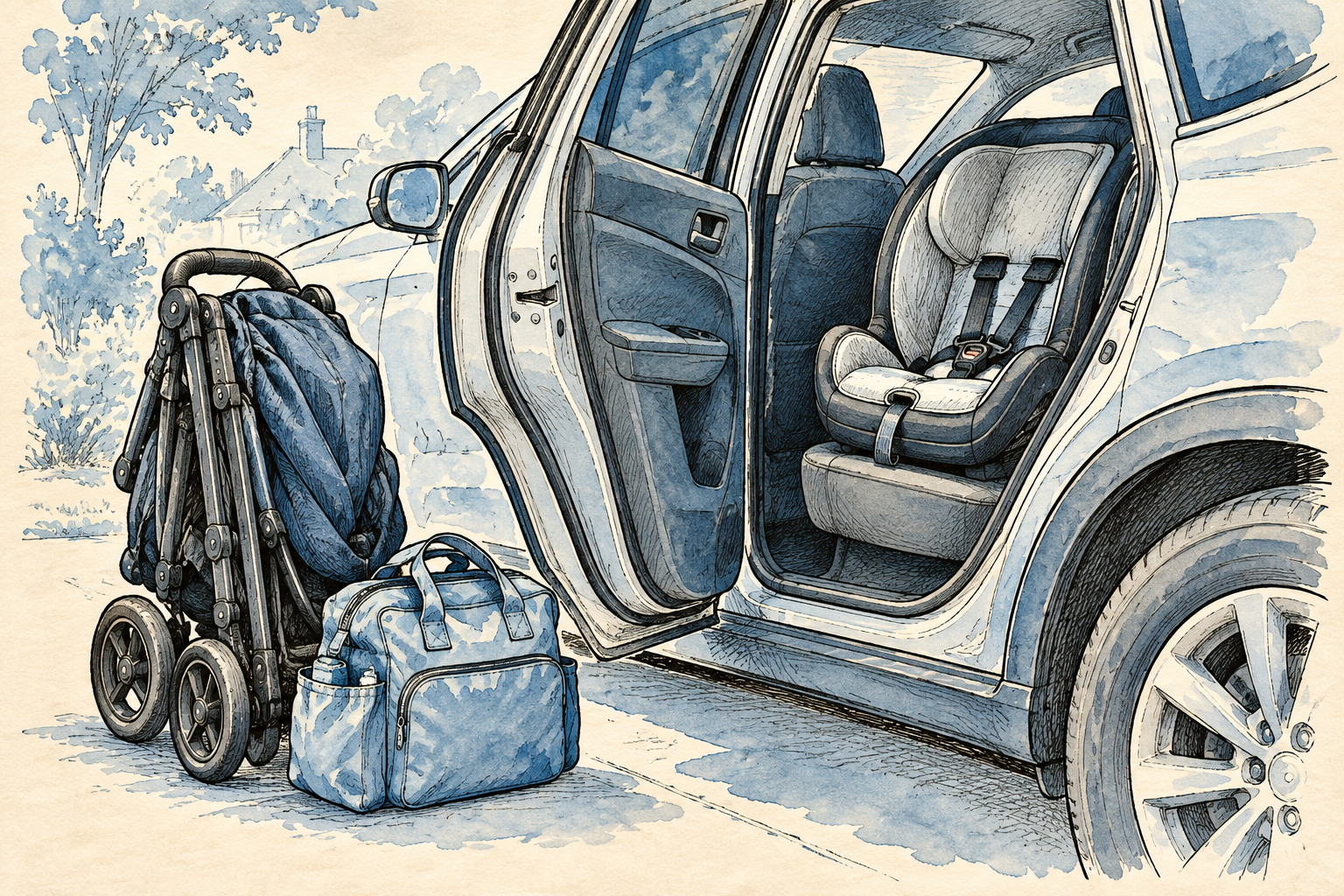
AI-generated illustration. Leaving the activity is not the same as starting the drive. The article’s hypothetical schedule reserves 10 minutes for goodbye, walking to the car, and buckling in.
Set a spending cap before choosing admission
For a brief visit, check the total family cost. Would you still be comfortable paying it if you needed to leave early?
Illustrative spending cap: $20 in additional outing costs
| Category | Maximum allocation |
|---|---|
| Admission and parking combined | $10 |
| Transport allowance | $5 |
| Unplanned essentials | $5 |
| Total | $20 |
These are planning allocations, not local prices. The example assumes snacks and water come from home; it excludes their grocery cost and the full cost of car ownership. Substitute your actual costs.
If the total exceeds your cap, choose another stop or revise the budget before leaving. Paying admission does not mean you have to stay longer.
Use a skip-or-shorten rule
Decide how much activity time makes the trip worthwhile. Suppose the example family chooses 30 minutes. Their plan allows 45 minutes, so a 15-minute departure delay leaves enough time, assuming everything else holds. A longer delay means choosing a closer, already-checked stop and recalculating, or skipping the destination outing.
- Weather changes before departure: switch to the checked indoor option and recalculate travel, entry time, and cost.
- Weather changes after arrival: head home if another stop would squeeze the return window.
- Your child tires early: leave. The deadline is the latest departure, not a target to endure.
- Parking or entry takes longer: subtract the delay from the visit.
If your toddler tends to fall asleep on the journey home, factor that into your choice of distance. Arriving before the usual nap does not necessarily prevent a car nap.
Copy this plan to your partner
Our one-stop Durham morning
Date: ___
Outdoor candidate and official information link: ___
Indoor replacement and official information link: ___
Hours, closures, admission, toilets, and access checked on: ___
Weather decision made before we leave: ___
Usual nap time: ___
Home routine allowance: ___
Must be home by: ___
Return travel + exit/loading + extra buffer: ___
Must leave the activity by: ___
Outbound travel + parking/walking + snack/change allowance: ___
Planned departure from home: ___
Available activity time: ___
Minimum worthwhile activity time: ___
Spending cap and what it includes: ___
If we run late, we will: ___
Set an alarm shortly before the leave-by time to allow for a warning and a goodbye. One small activity can be enough.
For help planning your next outing, try OutDuet’s weekend planner.