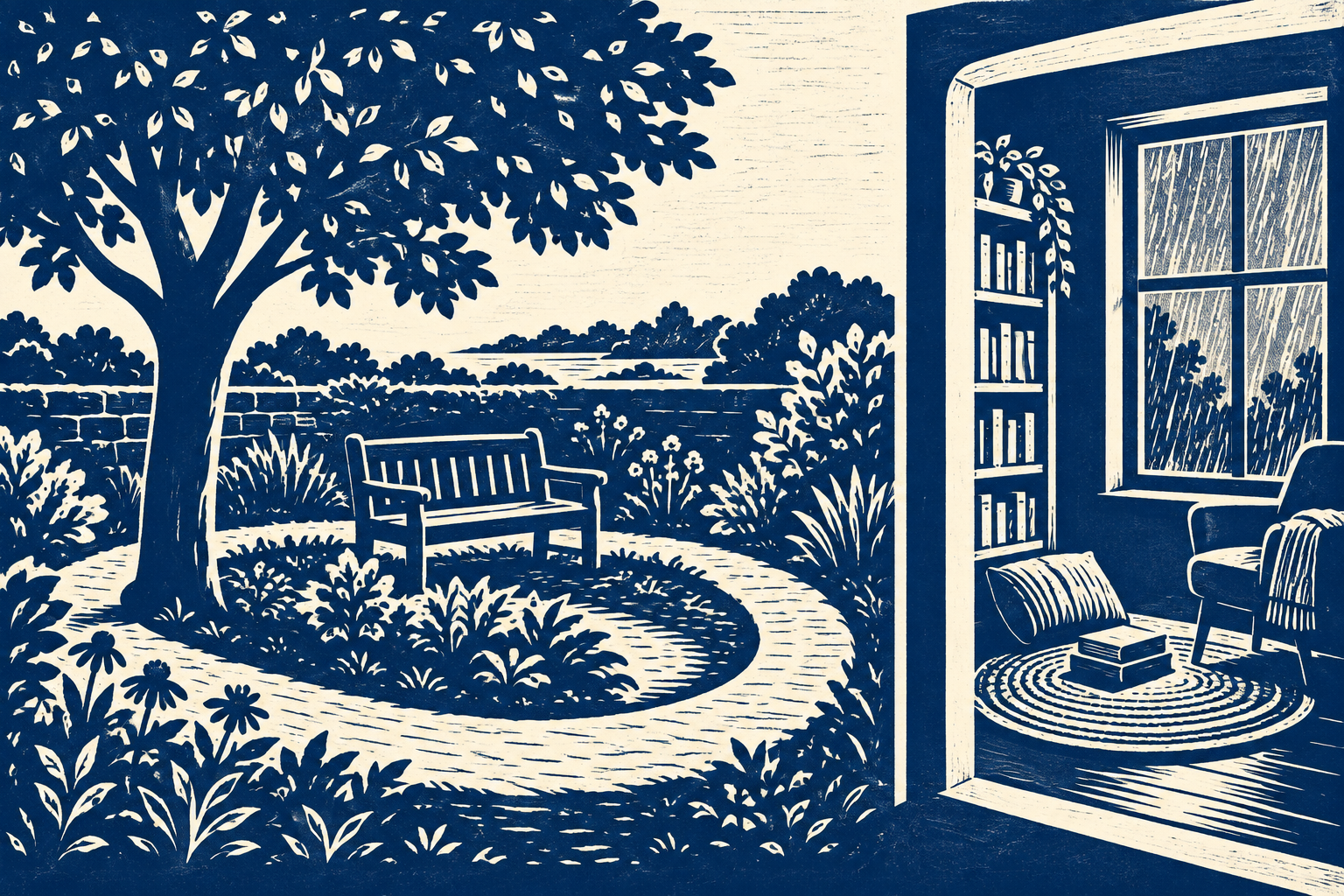
AI-generated illustration. Choose one manageable destination and check an indoor backup before leaving, not two stops to fit into the morning.
For a Durham, North Carolina, outing with a toddler and an older child, choose one destination where both can enjoy the same space in different ways. Work backward from your home-by time, and choose an indoor backup before leaving.
Prioritize a manageable visit, not the most attractions. This worksheet helps you plan around a nap deadline. It is not a verified Durham venue guide: no official venue sources were supplied, so destinations, hours, prices and facilities still need checking.
Choose one destination and one backup
Start with two candidates: a compact outdoor space for dry weather and an indoor space for rain. A park and a library children’s area are categories to investigate, not confirmed recommendations. Check both against these requirements:
| Check | What to confirm |
|---|---|
| Access | Open throughout your visit, with any booking requirements met. |
| Age suitability | Both children have something to do in the same supervision area. |
| Toilets | Toilets are accessible; changing facilities are available if needed. |
| Arrival | Parking or drop-off location, charges and walking distance are clear. |
| Admission | Adult and child prices, age bands and booking fees are checked. |
| Exit | You can leave without a long route or another required activity. |
Use the venue’s official website, city facility page or library branch page. If a crucial detail is missing, contact the venue. Silence is not confirmation.
Give each child a task in the same space
You do not need a toddler attraction followed by an older-child attraction. Change the depth of the activity instead of changing locations.
Outdoors: a short discovery route
Choose a small, clearly bounded area that suits your family.
- Toddler: Point to colors, listen for sounds and explore with an adult nearby.
- Older child: Sketch a simple map or find three different shapes.
- Shared finish: Each child chooses one favorite thing to show the other.
Keep both tasks within your supervision area. The older child’s challenge is not a responsibility to entertain or watch the toddler.
Indoors: a picture-and-story challenge
If the venue permits it and has suitable materials, try a short reading visit:
- Toddler: Find familiar objects in a picture book with an adult.
- Older child: Choose a book on the same theme, draw an alternative ending or explain a favorite illustration.
- Shared finish: Each child selects one page to share.
Adapt the tasks to your children’s interests and abilities.
Set a firm stop time
Illustrative schedule: Leave home at 9:00 a.m. and return by 11:00 a.m., with any lunch or wind-down time allowed for afterward. These are planning allowances, not verified Durham journey times or venue hours.
| Time | Plan | Allowance |
|---|---|---|
| 9:00–9:15 | Travel, park and reach the activity area | 15 minutes |
| 9:15–9:45 | Explore together using each child’s task | 30 minutes |
| 9:45–10:00 | Toilets and a snack where permitted | 15 minutes |
| 10:00–10:30 | Continue nearby; finish with each child’s favorite | 30 minutes |
| 10:30–10:45 | Stop, gather belongings and return to the car | 15 minutes |
| 10:45–11:00 | Travel home | 15 minutes |
Total: 30 minutes for round-trip travel and arrival, 60 for activities, 15 for snacks and toilets, and 15 for departure. The walk back to the car is included in the departure buffer.
Estimate travel from your actual starting point. If it needs more time, shorten the activities or choose somewhere closer. Do not squeeze the departure buffer.
Set two reminders: 10:30 means activities end; 10:45 means leave the parking area. The buffer is for shoes, coats and unexpected delays, not one more attraction. If the journey home tends to trigger an unwanted toddler nap, adjust the timing or destination.

AI-generated illustration. In the same supervised area, a toddler can notice leaf colors while an older child finds or sketches different shapes. The challenge changes; the destination does not.
Make the weather decision at home
For this schedule, check the forecast, conditions and venue notices at 8:30 a.m. Switch indoors if the outdoor plan looks unsuitable.
The backup must fit the travel allowance from home. It does not need to be next door to the outdoor destination: you are not visiting both.
Check its hours, access and costs separately. If neither option works, choose a home activity rather than a cross-town search.
Separate checked prices from your spending cap
Fill in the budget before committing. Record the official price page and the date checked; mark unknown costs as “unknown,” not zero.
| Cost | Amount or calculation |
|---|---|
| Adult admission | ___ adults × $___ = $___ |
| Toddler admission | Checked age-band price: $___ |
| Older-child admission | Checked age-band price: $___ |
| Booking fees | $___ |
| Parking or transport | $___ |
| Food | Planned purchases: $___ |
| Expected total | $___ |
| Family spending cap | $___ |
Hypothetical example: A $40 spending cap, with $10 reserved for food and $5 for parking or transport, leaves $25 for admission and booking fees. These are family allowances, not Durham prices. If checked entry costs exceed $25, choose a cheaper destination or deliberately revise the cap.
Your ready-to-share plan
Copy this once the checks are complete:
Morning plan
Home by: ___; nap or wind-down begins: ___
Main destination and official information link: ___
Indoor backup and official information link: ___
Weather decision at: ___
Outbound travel and arrival allowance: ___; return travel allowance: ___
Toddler activity: ___
Older-child activity in the same area: ___
Toilets, parking and access checked: ___
Activities stop at: ___; leave the parking area by: ___
Expected cost: $___; spending cap: $___
Leave room for a small outing to be enough: one worthwhile activity for each child and a workable exit.
For help turning these constraints into a plan, plan your weekend with OutDuet.